

Introduction
Nancy Kulp was not your typical Hollywood actress. She was a journalist, a naval officer, a political candidate, a college educator, and one of the most recognizable character actresses in the history of American television. Her portrayal of Miss Jane Hathaway on CBS’s beloved sitcom The Beverly Hillbillies turned her into a cultural icon whose legacy continues to resonate with audiences even today. When people search for Nancy Kulp net worth in 2026, they are really asking about far more than a dollar figure. They want to understand the full scope of a woman who lived on her own terms across nearly seven decades of remarkable American history.
Nancy Kulp net worth at the time of her death in February 1991 was estimated at approximately $1 million. Adjusted for inflation and measured against what her career would have earned in today’s streaming-era entertainment economy, that figure climbs to somewhere between $2 million and $3 million in 2026 dollars. But the true measure of her wealth was never financial. It was the decades of laughter she gifted to American households, the students she mentored, the country she served, and the political courage she showed when most of her peers stayed quietly on the sidelines.
This comprehensive guide covers everything worth knowing about Nancy Kulp, including her biography, education, military service, acting career, political ambitions, personal life, cause of death, and a detailed breakdown of her net worth as assessed from a 2026 perspective.
Who is Nancy Kulp?
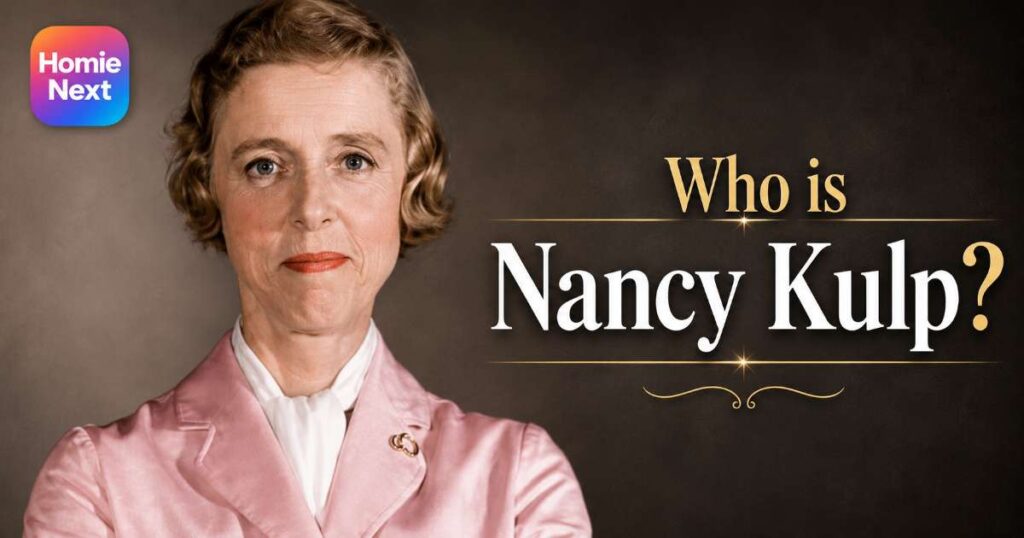
Nancy Kulp was an American actress, journalist, military veteran, political candidate, and educator whose multifaceted life defied every Hollywood stereotype of her era. She is best remembered for playing Miss Jane Hathaway, the prim and intelligent secretary to banker Milburn Drysdale on The Beverly Hillbillies, which aired on CBS from 1962 to 1971. That single role made her a household name across America and cemented her place in television history.
What made Nancy Kulp genuinely exceptional was what she accomplished outside the spotlight. Before landing in Hollywood, she had already earned a journalism degree, pursued postgraduate studies in English and French, served as a commissioned officer in the United States Naval Reserve during World War II, and built a career as a feature writer who interviewed some of the biggest celebrities of the 1940s. After her television fame peaked, she ran for Congress in Pennsylvania, taught acting at a liberal arts college, and continued appearing in films and television shows well into her final years.
She was, in every meaningful sense, a woman of substance.
Also Read: Mikhaila Peterson Husband: A Complete 2026 Overview of Jordan Fuller’s Life, Career, and Love Story
Nancy Kulp Profile Summary
| Detail | Information |
| Full Name | Nancy Jane Kulp |
| Date of Birth | August 28, 1921 |
| Place of Birth | Harrisburg, Pennsylvania, USA |
| Nationality | American |
| Date of Death | February 3, 1991 |
| Place of Death | Palm Desert, California, USA |
| Age at Death | 69 years |
| Height | 5 feet 9 inches |
| Eye Color | Blue |
| Education | B.S. Journalism, Florida State University; M.A. English/French, University of Miami |
| Occupation | Actress, Journalist, Naval Officer, Educator, Politician |
| Years Active | 1951 to 1989 |
| Political Party | Democratic |
| Spouse | Charles Malcolm Dacus (m. 1951; div. 1953) |
| Children | None |
| Best Known For | Miss Jane Hathaway on The Beverly Hillbillies |
| Emmy Nominations | 1 (Primetime Emmy Award, 1967) |
| Estimated Net Worth | $1 million at death ($2–3 million in 2026 dollars) |
| Resting Place | Westminster Presbyterian Cemetery, Mifflintown, Pennsylvania |
Nancy Kulp Physical Appearances
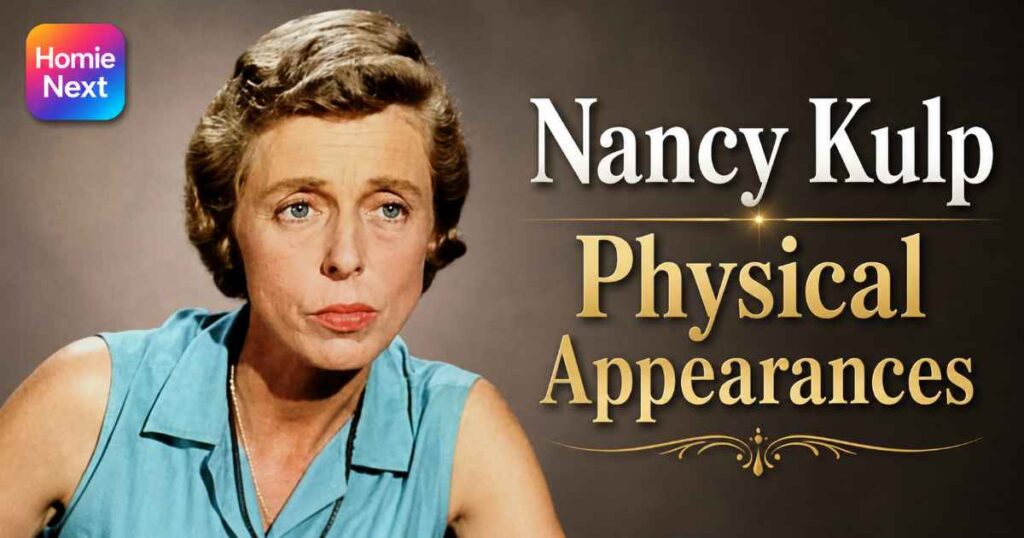
Nancy Kulp had a physical presence that was impossible to ignore on screen. She stood at 5 feet 9 inches tall, which was notably statuesque for actresses of her era. In the 1950s and 1960s, Hollywood favored a very particular type of feminine appearance, and Kulp did not fit neatly into that mold. Rather than hiding behind it, she leaned into her distinctive look and turned it into a professional asset.
She had striking blue eyes, an angular and slender frame, and a cultivated speaking voice described by contemporaries as flute-like and precise. Her tall, lanky build suited the prim, bookish characters she was frequently cast to play, and she delivered them with a comic precision that few actresses of her generation could match. Early in her career, a Hollywood gossip column unkindly labeled her “the homeliest girl on television,” a description that was as inaccurate as it was cruel. By all accounts, Kulp was a vibrant and socially active personality who never lacked for companionship or admirers throughout her years in show business.
Her physical distinctiveness became her greatest professional advantage. In an industry full of conventionally glamorous faces, Nancy Kulp stood out immediately and memorably every time she appeared on screen.
Nancy Kulp Early Life
Nancy Jane Kulp was born on August 28, 1921, in Harrisburg, Pennsylvania, the only child of Robert Tilden Kulp and Marjorie S. Kulp. Her mother was a schoolteacher who later became a school principal, and her father worked as a traveling salesman. Growing up in an educated, intellectually engaged household gave young Nancy an appreciation for learning and articulate expression that would shape everything she did for the rest of her life.
The family relocated to Florida during Nancy’s teenage years, a move that proved to be formative. The cultural shift from small-town Pennsylvania to the broader social landscape of Florida expanded her horizons considerably. She was a bright and curious student who absorbed knowledge across multiple disciplines, and her interest in writing emerged early as a dominant passion.
During her college years, she worked as a feature writer for the Miami Beach Tropics newspaper, profiling major celebrities of the day including Clark Gable, Errol Flynn, and the Duke and Duchess of Windsor. This journalistic experience sharpened her observational skills and her ear for dialogue, both of which would later become critical tools in her acting craft. Her early life was defined not by any particular hardship, but by an unusual combination of intellectual discipline and social curiosity that set her apart from her peers.
Nancy Kulp Education
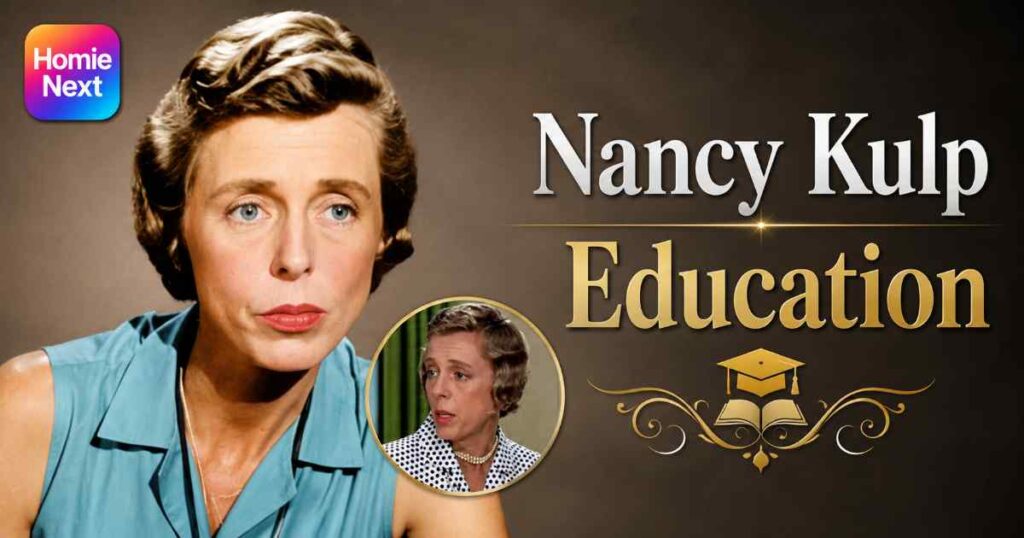
Education was never just a checkbox for Nancy Kulp. It was a lifelong commitment that she carried from her undergraduate years all the way through to her final professional chapter as a college educator.
She enrolled at Florida State College for Women, which was later renamed Florida State University, where she pursued a Bachelor of Science degree in journalism. She completed that degree in 1943, graduating during one of the most turbulent periods in modern American history. Her academic performance reflected a serious and disciplined mind. During her time in college, she was already writing professionally for local newspapers and building a portfolio of feature journalism that showed real range and depth.
After earning her bachelor’s degree, she continued her education at the University of Miami, working toward a master’s degree in English and French. Her studies there were interrupted by the onset of World War II and her decision to volunteer for military service in 1944, but the academic foundation she built at both institutions gave her a level of linguistic fluency and intellectual confidence that distinguished her throughout her career.
Her educational background was a point of considerable pride. In an era when many Hollywood actresses were expected to be decorative rather than intellectually formidable, Nancy Kulp’s dual degrees in journalism and linguistics made her a rare figure. She spoke multiple languages, read widely, and brought genuine intellectual curiosity to every role she undertook. That education also gave her the credibility to later teach acting at the university level and pursue a credible political campaign, both of which required the kind of substantive personal foundation that a serious education provides.
Nancy Kulp Military Service
One of the most underappreciated chapters in Nancy Kulp’s remarkable biography is her service in the United States Military during World War II. In 1944, while pursuing her master’s degree at the University of Miami, Kulp made the decision to leave her studies and volunteer for the United States Naval Reserve. It was a choice that spoke volumes about her sense of patriotic duty and personal courage.
She served actively from 1944 to 1946 and rose to the rank of Lieutenant, Junior Grade. During her service, she earned several military decorations, including the American Campaign Medal, which was awarded for service within the American theater of operations during World War II. She was honorably discharged in 1946 after the war’s conclusion.
Her military service shaped her in ways that were visible throughout the rest of her life. The discipline, organizational skill, and sense of civic responsibility she developed during her Naval years informed everything from her professional work ethic to her later political activism. She was proud of her service and rarely shied away from discussing it. For modern audiences rediscovering her legacy in 2026, this chapter of her story adds a dimension of depth and grit that goes far beyond anything her television persona suggested.
Nancy Kulp Career
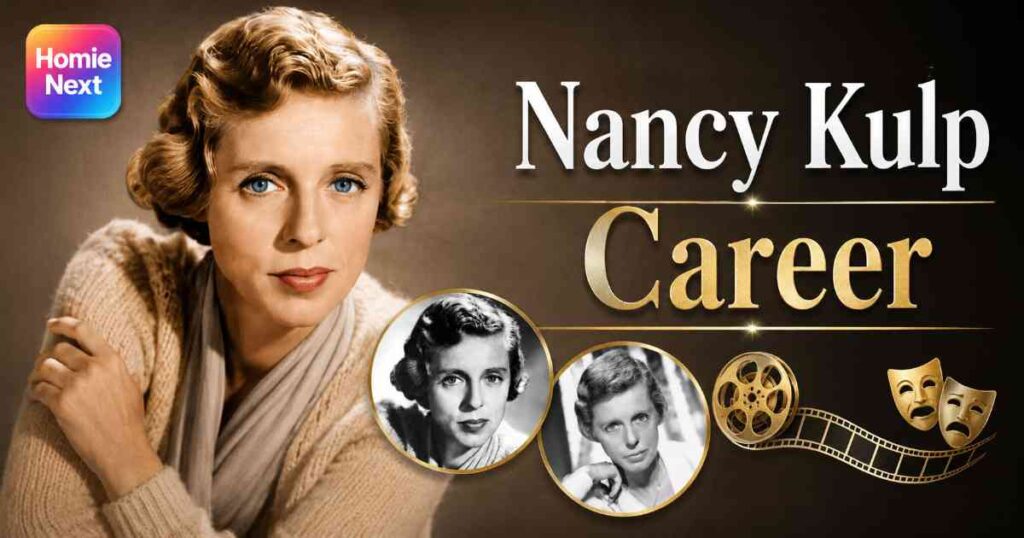
Nancy Kulp’s career spanned nearly four decades and covered an extraordinary range of professional roles. She was not simply an actress. She was a journalist who became a publicist, a publicist who became a character actress, a character actress who became a television icon, and a television icon who became an educator. Each transition was purposeful and each chapter added something genuinely new to an already remarkable professional story.
Early Career Breakthrough
After her honorable discharge from the Naval Reserve in 1946, Kulp moved toward the entertainment industry, though not initially as a performer. In 1951, she married Charles Malcolm Dacus and relocated with him to Van Nuys, California, where she took a position in the publicity department at MGM Studios. Her background in journalism made her a natural fit for studio publicity work, and she quickly built a reputation as a skilled communicator with a sharp instinct for storytelling.
Her transition from behind the camera to in front of it happened almost by accident. Director George Cukor, who recognized something compelling in her screen presence, encouraged her to try acting. Casting director Billy Gordon supported that assessment. Taking their advice, Kulp made her film debut in 1951 as a character actress in The Model and the Marriage Broker, a romantic drama that gave her first taste of what life in front of the camera could be.
She took to acting with the same disciplined energy she had brought to every other endeavor in her life, and her career began building momentum quickly.
Television Success
Through the early and mid-1950s, Nancy Kulp built a steady and increasingly visible career as a character actress in both film and television. She appeared in a wide range of productions, bringing to each of them the intelligence, comic timing, and distinctive physical presence that would eventually make her famous.
In 1955, she joined the cast of The Bob Cummings Show (also known as Love That Bob), where she played the recurring role of Pamela Livingstone, an enthusiastic bird-watching neighbor whose comic eccentricity became a fan favorite. The role showcased her talent for dry, deadpan comedy and introduced her to a national television audience for the first time. During this same period, she appeared in episodes of I Love Lucy, Perry Mason, and The Twilight Zone, each appearance adding to her growing reputation as one of Hollywood’s most reliable and versatile character performers.
The Beverly Hillbillies: Career-Defining Role
In 1962, Nancy Kulp landed the role that would define her career and secure her permanent place in American television history. She was cast as Miss Jane Hathaway, the fiercely loyal, bookish, and often lovelorn secretary to banker Milburn Drysdale on CBS’s new sitcom The Beverly Hillbillies. The show premiered on September 26, 1962, and immediately became a phenomenon, regularly drawing 60 million viewers per episode during its peak seasons.
Miss Jane Hathaway was a gift of a character. Intelligent, earnest, perpetually flustered by the Clampett family’s backwoods ways, and nursing an unrequited crush on the mountain-man Jethro Bodine, she was the comedic anchor of a show built entirely around culture clash. Kulp played her with warmth, precision, and a comedic intelligence that elevated every scene she appeared in. She appeared in all 274 episodes across the show’s nine-season run from 1962 to 1971, a remarkable record of consistency that speaks to both her professionalism and her importance to the production.
Her performance earned her a Primetime Emmy Award nomination in 1967 for Outstanding Continued Performance by an Actress in a Leading Role in a Comedy Series. It was a well-deserved recognition of work that had been consistently excellent for five full seasons before the nomination arrived.
Post-Beverly Hillbillies Career
When The Beverly Hillbillies ended its run in 1971, Nancy Kulp did not retire. She continued working steadily across television and theater for nearly two more decades. From 1973 to 1974, she appeared in a recurring role on The Brian Keith Show. In 1975, she joined the cast of Sanford and Son as May Hopkins, the mother of Officer “Hoppy” Hopkins, appearing in five episodes across Seasons 5 and 6. Her prim, buttoned-up persona played brilliantly against Redd Foxx’s irreverent comedic style, and the contrast delighted audiences.
Through the late 1970s and 1980s, she continued making guest appearances on popular television programs including The Love Boat, Fantasy Island, CHiPs, Simon and Simon, Scarecrow and Mrs. King, and Quantum Leap. She also participated in The Return of the Beverly Hillbillies in 1981, reprising her iconic role for a reunion special that gave fans of the original series a welcome return to familiar territory. Her final television appearance came in 1989, making her active career span an impressive 38 years from 1951 to 1989.
Broadway and Theater Work
In addition to her film and television work, Nancy Kulp maintained a genuine connection to the stage throughout her career. After The Beverly Hillbillies ended, she found meaningful work in theater and Broadway productions that allowed her to stretch beyond the comedic television persona she had become so associated with. Stage work gave her the kind of creative range that television schedules and character typecasting rarely permitted, and she embraced the opportunity with the intellectual curiosity that had defined her since her journalism days.
Her theater work demonstrated that her talents were never limited to a single format or genre. She was a trained, disciplined performer who understood storytelling in its broadest sense, and the stage gave her the freedom to explore that range more fully than most of her television contemporaries ever attempted.
Nancy Kulp Political Career
Nancy Kulp’s decision to enter political life in the 1980s was not an impulsive choice. It grew from years of committed civic engagement and a genuine belief in the democratic process. She had worked with the Democratic State Committee in Pennsylvania for a number of years before deciding to run for public office, volunteering her time and her organizational skills to causes she believed in.
In 1984, she ran as the Democratic nominee for Pennsylvania’s 9th Congressional District, seeking to unseat Republican incumbent Bud Shuster. At 62 years old, she was frank about the challenge her background in entertainment might pose for some voters, but she pointed out, with characteristic directness, that Ronald Reagan had successfully made the journey from screen to politics, and that any person who “listens and cares” could serve the public well.
The campaign attracted support from fellow entertainment industry figures, most notably her close friend Ed Asner, who campaigned actively on her behalf. But the race took a painful turn when her former Beverly Hillbillies co-star Buddy Ebsen volunteered to record a radio advertisement for Shuster’s campaign, calling Kulp “too liberal” and urging voters to support the incumbent. For Kulp, the betrayal by a long-time professional colleague was deeply hurtful. She lost the election by a significant margin and did not run for public office again. She reportedly did not speak to Ebsen for several years afterward, though the two eventually reconciled before her death.
Her political campaign, despite its unsuccessful outcome, was a testament to her courage and her refusal to limit herself to the comfortable confines of celebrity. She fought for something she believed in, on terrain that was genuinely hostile, and she did so with her head held high.
Artist in Residence and Teaching
Following her 1984 political defeat, Nancy Kulp channeled her considerable energy and experience into education. She accepted a position as artist-in-residence at Juniata College, a private liberal arts institution in Huntingdon, Pennsylvania. In this role, she worked directly with students pursuing studies in theater and the performing arts, sharing the accumulated wisdom of nearly four decades of professional experience in film, television, and stage.
Her teaching went far beyond technique. She brought to the classroom the same intellectual depth and genuine curiosity that had characterized every phase of her life. She directed student theatrical productions, conducted acting workshops, mentored individual performers, and enriched the college’s performing arts program in ways that left a lasting impression on everyone who studied under her guidance.
Her work at Juniata College also provided stable, consistent income during the later years of her career, supplementing the residual income she continued to receive from Beverly Hillbillies reruns in syndication. The academic environment suited her well. She had always been a teacher at heart, and the formal opportunity to share her knowledge with the next generation of performers was one she embraced with evident fulfillment.
Nancy Kulp Movies and TV Shows
Notable Film Appearances
Nancy Kulp’s film career ran in parallel with her television work throughout the 1950s and 1960s. She appeared in a wide range of productions, consistently delivering character performances that were precise, witty, and memorable.
| Film | Year | Role |
| The Model and the Marriage Broker | 1951 | Supporting Role |
| Steel Town | 1952 | Supporting Role |
| Shane | 1953 | Supporting Role |
| A Star Is Born | 1954 | Supporting Role |
| The Three Faces of Eve | 1957 | Supporting Role |
| The Parent Trap | 1961 | Miss Inch (camp counselor) |
| The Beverly Hillbillies (Film) | 1993 | Archival Footage |
| The Aristocats (Voice) | 1970 | Frou-Frou the Horse |
Her role as Miss Inch in Disney’s The Parent Trap in 1961 introduced her to younger audiences who may not have been watching prime-time television. Her voice performance as Frou-Frou the horse in Disney’s animated feature The Aristocats in 1970 demonstrated her versatility and added yet another dimension to a career already full of them.
Major Television Appearances
| Show | Years | Role/Notes |
| The Bob Cummings Show | 1955 to 1959 | Pamela Livingstone (recurring) |
| I Love Lucy | 1956 | English Maid (guest) |
| The Beverly Hillbillies | 1962 to 1971 | Miss Jane Hathaway (main cast, 274 episodes) |
| The Brian Keith Show | 1973 to 1974 | Recurring role |
| Sanford and Son | 1975 to 1976 | May Hopkins (5 episodes) |
| The Love Boat | 1978 | Guest appearance |
| Fantasy Island | 1981 | Guest appearance |
| Return of the Beverly Hillbillies | 1981 | Miss Jane Hathaway (reunion special) |
| CHiPs | 1982 | Guest appearance |
| Simon and Simon | 1983 | Guest appearance |
| Scarecrow and Mrs. King | 1985 | Guest appearance |
| Quantum Leap | 1989 | Final TV appearance |
Nancy Kulp Husband
Nancy Kulp married Charles Malcolm Dacus in 1951, the same year she made her film debut and began her career in earnest. The couple moved together to Van Nuys, California, where Kulp took her position at MGM’s publicity department. Their marriage lasted only two years, however. The couple divorced in 1953, and Kulp never remarried.
Very little has been publicly documented about the specific reasons for the breakdown of the marriage, and Kulp herself remained characteristically private about her personal life throughout her career. What is known is that following the divorce, she threw herself entirely into her professional work and built a life of considerable independence and fulfillment outside of marriage.
She was, by all accounts, a sociable and well-liked figure in Hollywood social circles, and contemporaries consistently described her as a warm and engaging personality. But she kept the intimate details of her personal life firmly away from the public eye, a choice that reflected both her natural reserve and her discomfort with the invasive aspects of celebrity culture.
Nancy Kulp Children
Nancy Kulp did not have any children. During her marriage to Charles Dacus from 1951 to 1953 and throughout the rest of her life, she remained childless. She never publicly discussed whether this was a choice or circumstance, and her personal privacy on the matter was always respected by those around her.
What she did leave behind, in a very meaningful sense, were the students she mentored at Juniata College, the television audiences she made laugh for nearly a decade on The Beverly Hillbillies, and the cultural legacy of a character so vivid and so specific that her headstone in Mifflintown, Pennsylvania carries the words “Miss Jane Hathaway” alongside her own name. That is a form of living on that most parents never achieve, and Nancy Kulp earned it entirely on her own terms.
Nancy Kulp Cause of Death
Nancy Kulp was diagnosed with cancer in 1990. The diagnosis came during a period when she had largely stepped back from active performing work, having made her final television appearance in 1989. She underwent chemotherapy treatment following the diagnosis, but the disease progressed despite her efforts to fight it.
She passed away on February 3, 1991, at the home of a friend in Palm Desert, California. She was 69 years old. Her death was reported with considerable sadness across the entertainment industry, and tributes from former co-stars, colleagues, and fans poured in from around the country.
She was buried at Westminster Presbyterian Cemetery in Mifflintown, Pennsylvania, the small town that had always been the emotional home of this Pennsylvania native who had traveled so far and accomplished so much. The inscription on her headstone reads “Miss Jane Hathaway,” a choice that speaks to the genuine warmth she felt for the character and the affection the character had earned from millions of viewers across generations.
Her death at 69, while it robbed audiences of what might have been many more years of remarkable work, came at the end of a life lived with extraordinary fullness and purpose.
Nancy Kulp Net Worth
Income Sources and Career Earnings
Nancy Kulp net worth at the time of her death in February 1991 was estimated at approximately $1 million. This was the accumulated result of nearly four decades of professional work across multiple income streams, all managed with the kind of careful financial discipline that her journalism and military training had instilled in her from an early age.
Her wealth came from the following primary sources:
- Television acting income from regular and recurring roles across dozens of productions
- Film acting income from character roles in studio and independent productions from 1951 onward
- Voice acting income, most notably her role in Disney’s The Aristocats in 1970
- Syndication residuals from The Beverly Hillbillies, which remained in continuous syndication after the show ended in 1971
- Teaching income from her artist-in-residence position at Juniata College in Pennsylvania
- Political campaign work, while not directly income-generating, connected her to networks and opportunities that supported her post-Hollywood career
Each income stream was relatively modest by the standards of leading Hollywood actors, but together they created a financial foundation that was stable, diversified, and intelligently maintained throughout her career.
Beverly Hillbillies Salary and Residual Income
The Beverly Hillbillies was the central pillar of Nancy Kulp’s financial life. She appeared in all 274 episodes of the series across its nine-season run, making her one of the most consistently present cast members in the show’s entire production history. While exact per-episode salary figures were never made public, financial analysts and entertainment historians who have studied comparable salaries from the era have estimated her earnings from the show in the following ranges:
| Period | Estimated Per-Episode Salary | Episodes (Approx.) |
| Early seasons (1962 to 1965) | $500 to $800 | Approx. 100 |
| Later seasons (1966 to 1971) | $1,000 to $4,500 | Approx. 174 |
| Total show earnings | Approx. $500,000 to $600,000 | 274 episodes |
Beyond her per-episode fees, Kulp continued earning residual income from the show’s syndication for years after it ended in 1971. The Beverly Hillbillies was one of the most frequently syndicated programs in television history, airing on local stations across the country throughout the 1970s and 1980s. Residual payments from those reruns are estimated to have added between $150,000 and $200,000 to her net worth over the two decades following the show’s cancellation.
Financial Management and Investments
One of the aspects of Nancy Kulp’s financial story that receives less attention than it deserves is the quality of her financial management. She understood, from early in her career, that the entertainment industry was inherently unpredictable, and she planned accordingly. She diversified her income through voice acting, maintained her teaching credentials, and avoided the extravagant lifestyle choices that depleted the fortunes of many of her Hollywood contemporaries.
She lived modestly by Hollywood standards, investing quietly and managing her expenses with the same practical discipline she brought to every other area of her life. Her Pennsylvania roots gave her a fundamentally down-to-earth relationship with money that insulated her from the financial instability that plagued many actors of her generation.
Net Worth Adjusted for 2026
When Nancy Kulp’s estimated $1 million net worth at the time of her 1991 death is adjusted for inflation and translated into 2026 purchasing power, the figure rises substantially. Using standard inflation calculation methods, $1 million in 1991 is equivalent to approximately $2.3 million to $3 million in 2026 dollars.
Furthermore, entertainment industry analysts note that if Kulp had been working in today’s media environment, her financial position would have been dramatically stronger. Streaming platforms pay residuals on an entirely different scale than the syndication deals of the 1970s and 1980s. A character actress with her profile and her 274-episode run on one of television’s most beloved shows would, in the streaming era, be generating substantial ongoing income from platforms licensing Beverly Hillbillies content for global distribution.
| Measurement | Estimated Value |
| Net worth at death (1991) | Approx. $1 million |
| 2026 inflation-adjusted equivalent | Approx. $2.3 to $3 million |
| Estimated value in streaming era | $5 million or higher |
What Happened to Nancy Kulp Estate
Following Nancy Kulp’s death in February 1991, the details of her estate were handled privately and were never made the subject of public legal proceedings or media coverage. She died without children, and her ex-husband Charles Dacus, from whom she had been divorced since 1953, had no legal claim to her estate.
The specifics of who inherited her assets and how her personal property was distributed remain undocumented in the public record. What is known is that her professional legacy continued to generate cultural and, in limited ways, financial value through the ongoing syndication and licensing of The Beverly Hillbillies, though those residual streams would have passed to the production company rather than to her heirs after her death. Her personal memorabilia, correspondence, and private papers have not been the subject of any major auction or institutional acquisition that has been publicly reported.
Nancy Kulp vs Other Professionals
To understand where Nancy Kulp’s net worth and career achievements sit relative to her contemporaries, it is useful to compare her profile against other classic television character actresses and performers of the same era.
| Name | Best Known For | Estimated Net Worth | Emmy Nominations |
| Nancy Kulp | The Beverly Hillbillies | $1 million ($2–3M in 2026) | 1 |
| Bea Benaderet | Petticoat Junction | Comparable range | Multiple |
| Imogene Coca | Your Show of Shows | Approx. $2 million | Multiple |
| Ann B. Davis | The Brady Bunch | Approx. $5 million | 2 Emmy wins |
| Rose Marie | The Dick Van Dyke Show | Approx. $5 million | Multiple |
Nancy Kulp’s net worth was modest relative to some peers who achieved leading or co-lead status on long-running shows. But as a supporting character actress who worked consistently, diversified her income intelligently, and never lost a step professionally across nearly four decades, her financial legacy compares favorably to the broad middle tier of classic television performers of her generation. Her 274 episodes on a top-rated network show, combined with her Emmy nomination and her ongoing teaching and residual income, place her comfortably in the category of financially stable and professionally accomplished classic television talent.
A Legacy of Laughter and Service
Cultural Impact and Influence
Miss Jane Hathaway is one of the most enduring character creations in American television history. Decades after The Beverly Hillbillies ended its original run, the character remains immediately recognizable to multiple generations of viewers. She is a fixture in discussions of classic American comedy, a touchstone in pop culture references to the 1960s television era, and a beloved figure whose peculiar combination of intellectual dignity and romantic haplessness captured something genuinely true about a certain kind of American personality.
Nancy Kulp brought that character to life with a commitment and a craft that went far beyond what the role required on paper. She could have played Miss Jane as a simple comic type. Instead, she made her a fully realized human being whose dignity was never sacrificed even in the midst of the show’s most absurdist comedic moments. That is the mark of a genuinely gifted performer.
In 2026, The Beverly Hillbillies continues to air in syndication on various cable and streaming platforms, introducing new audiences to Kulp’s work every year. Her performance has aged remarkably well, partly because it was grounded in real intelligence and observation rather than in the transient comedic fashions of its era.
Multi-Dimensional Legacy
What makes Nancy Kulp’s legacy particularly compelling in 2026 is precisely its multidimensionality. She was not just a television actress. She was a World War II veteran who served with distinction and earned military decorations. She was a trained journalist who had interviewed the biggest celebrities in the world before she was 25 years old. She was a linguist who spoke multiple languages. She was a political candidate who ran for Congress on principle, knowing she was the underdog, and who faced a public betrayal from a professional colleague without losing her grace. She was an educator who mentored the next generation of performers with genuine generosity.
Her headstone says “Miss Jane Hathaway,” but her life said something much larger than any single role could contain. She was a woman who lived fully, served faithfully, laughed warmly, and left the world genuinely richer for having been in it.
Nancy Kulp vs Other Professionals
| Category | Nancy Kulp | Typical Classic TV Character Actress |
| Career length | 38 years (1951 to 1989) | 15 to 25 years average |
| Military service | Yes, USNR, WWII veteran | Rare |
| Higher education | Two degrees (BA + MA equivalent) | Uncommon |
| Political campaign | Yes, 1984 Congressional run | Very rare |
| Emmy nomination | Yes, 1967 | Common among lead performers |
| Teaching career | Yes, Juniata College | Uncommon |
| Net worth at death | Approx. $1 million | Widely variable |
Frequently Asked Questions
What was Nancy Kulp net worth when she died?
Nancy Kulp’s net worth at the time of her death in February 1991 was estimated at approximately $1 million, accumulated over a 38-year career in television, film, voice acting, and education.
How much did Nancy Kulp make from Beverly Hillbillies?
Based on comparable salaries of the era, she is estimated to have earned between $500,000 and $600,000 from her 274 episodes of The Beverly Hillbillies across the show’s nine-season run from 1962 to 1971.
Did Nancy Kulp net worth include residuals from reruns?
Yes, she continued earning syndication residuals from Beverly Hillbillies reruns well after the show ended in 1971, with estimates suggesting those residuals added between $150,000 and $200,000 to her net worth over two decades.
Was Nancy Kulp wealthy compared to other classic TV stars?
She was comfortably middle-tier financially, not among the wealthiest classic television performers but financially stable and more diversified than many, thanks to teaching income, residuals, and voice acting work alongside her acting career.
How did Nancy Kulp education affect her net worth?
Her journalism degree and postgraduate studies gave her the credentials to teach at Juniata College after her political career, adding a steady and respectable income stream during the final decade of her life outside of Hollywood.
What happened to Nancy Kulp net worth after her death?
She died without children and her estate was handled privately. The specific distribution of her assets was never made public, and no major legal proceedings or auctions related to her estate have been publicly documented.
Could Nancy Kulp net worth have been higher today?
Almost certainly. In the streaming era, her 274-episode run on one of television’s most beloved shows would generate substantially higher residuals. Entertainment analysts suggest her net worth could have been $5 million or higher in today’s media environment.
How long was Nancy Kulp career?
Her active career spanned 38 years, from her film debut in 1951 to her final television appearance in 1989, making her one of the longer-serving character actresses of her generation in American television and film.
What awards did Nancy Kulp win?
She received a Primetime Emmy Award nomination in 1967 for Outstanding Continued Performance by an Actress in a Leading Role in a Comedy Series for her work on The Beverly Hillbillies, and she received multiple military decorations including the American Campaign Medal for her Naval Reserve service during World War II.
Did Nancy Kulp have any children?
No. Nancy Kulp did not have any children during her marriage to Charles Malcolm Dacus from 1951 to 1953, and she remained childless throughout the rest of her life until her death in 1991.
Conclusion
Nancy Kulp net worth in 2026 is best understood not as a fixed dollar amount, but as a reflection of a career and a life that were genuinely extraordinary by any measure. She was a woman who earned her living with intelligence, discipline, and consistent professional excellence across nearly four decades. Her estimated $1 million at the time of her death, equivalent to $2 to 3 million in today’s dollars, was the product of smart career management, diverse income streams, careful financial planning, and the good fortune of landing a role in one of television’s most enduring and widely syndicated productions.
But the numbers, as always, tell only part of the story. The real legacy of Nancy Kulp is the character she brought to life so brilliantly that her own headstone bears the character’s name. It is the students she mentored at Juniata College. It is the military service she rendered to her country during its darkest hours. It is the political courage she showed when she ran for Congress against all odds. It is the journalism she practiced, the languages she mastered, and the laughter she gave to tens of millions of American households over the better part of a decade.
In 2026, more than three decades after her passing, Nancy Kulp’s story remains as compelling as ever. She was, quite simply, one of the most remarkable women that American entertainment ever produced.

